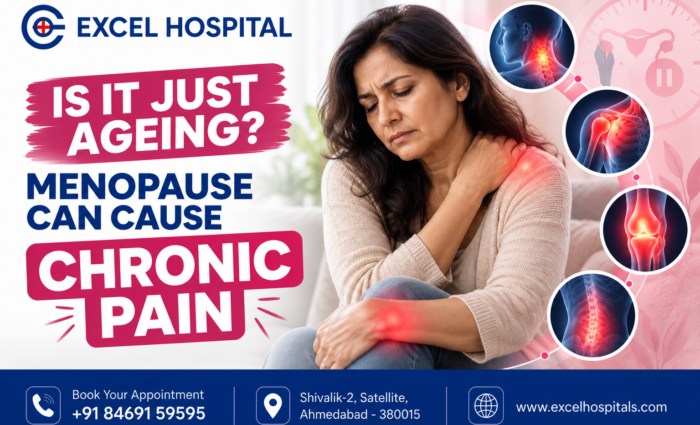

Menopause and Chronic Pain in Midlife: Why You Ache and What Helps, a Guide for Women in Ahmedabad
Aching knees, a stiff back, a shoulder that will not lift, or headaches that changed pattern in your 40s and 50s can belong to the same hormonal transition. This guide explains why, how to tell menopause pain from other conditions, and which treatments are worth discussing with a gynaecologist.
What is World Menopause Day 2026 about, and why should chronic pain concern you?
World Menopause Day falls on 18 October every year, and the International Menopause Society has chosen “Chronic Pain in Midlife” as its theme for 2026. The choice puts a spotlight on a symptom that rarely features in everyday conversations about menopause: ongoing pain in the joints, muscles, back, head, and pelvis.
Most women have heard about hot flushes and mood changes. Far fewer have been told that sore knees, stiff fingers, a painful neck, or a frozen shoulder can come from the same hormonal shift. If you are in your 40s or 50s and have been managing these complaints with a painkiller and a shrug, you are not alone, and you do not have to accept it as the price of getting older.
Menopause is confirmed when you have gone twelve months without a period, as the World Health Organization explains. The years before that point, called perimenopause, can last several years, and pain often begins there while your hormone levels rise and fall unpredictably. The sections below show you why this happens, how to separate menopause-related pain from other conditions, and what a gynaecologist in Ahmedabad can do about it.
How does menopause cause chronic pain?
Falling oestrogen changes how your joints, muscles, bones, and nervous system handle inflammation and pain, so the same activity that once felt comfortable can start to hurt. Oestrogen is not only a reproductive hormone. Receptors for it are present in cartilage, tendons, muscle, bone, and the brain regions that process pain signals, which is why its decline is felt across the whole body rather than in the pelvis alone.
Five mechanisms work together in most women:
- More inflammation. Oestrogen helps keep inflammation in check. As levels drop, joints and soft tissues are thought to become more reactive, which shows up as morning stiffness and aching.
- A lower pain threshold. Oestrogen influences how the brain and spinal cord turn incoming signals into the sensation of pain. With less of it, the same signal can feel sharper and last longer.
- Loss of bone and muscle. Bone loss speeds up in the years around menopause, and muscle mass tends to decline with age. Weaker muscles pass more load to the joints, and thinner bone can hurt on its own.
- Drier, less elastic connective tissue. Collagen in tendons, ligaments, skin, and vaginal tissue reduces, which contributes to stiffness, tendon injuries, and painful intercourse.
- Broken sleep and low mood. Night sweats, insomnia, and anxiety lower your pain threshold further, and pain in turn worsens sleep, creating a cycle that is hard to escape without treatment.
Surveys of midlife women often find that joint and muscle aches rank among the most frequent complaints, reported by more than half in several studies. The Mayo Clinic lists changes in joints, muscles, and bones among the recognised effects of the menopausal transition, yet these symptoms are still under-discussed in routine check-ups.
Which types of pain are linked to menopause?
Joint pain, muscle aches, back and neck pain, frozen shoulder, headaches, and vaginal or pelvic pain are the most common patterns. The table below shows how each one tends to feel, why midlife hormones contribute, and the signs that call for a proper check.
| Type of pain | What you may feel | Why midlife contributes | Get checked if |
|---|---|---|---|
| Joint pain (knees, hands, hips, shoulders) | Aching and stiffness, worse after rest and easing with movement | Lower oestrogen, more inflammation, weaker supporting muscles | Joints are swollen, red, or warm |
| Muscle aches | Generalised soreness, tiredness, slower recovery after activity | Loss of muscle mass, poor sleep, vitamin D deficiency | You notice real weakness, not only soreness |
| Back and neck pain | Dull ache, stiffness on waking, pain after long sitting | Bone loss, weaker core muscles, disc and spine changes | Pain shoots down an arm or leg, or you feel numbness |
| Frozen shoulder | Gradual pain and loss of movement, difficulty reaching behind you | Most often appears between ages 40 and 60 and affects women more than men | You cannot lift the arm or sleep on that side |
| Headaches and migraines | New patterns, or migraines that flare around irregular periods | Swinging oestrogen levels during perimenopause | Headache is sudden and severe, or comes with vision changes |
| Vaginal and pelvic pain | Dryness, burning, pain during intercourse, urinary urgency | Thinning of vaginal and urinary tissue after oestrogen loss | Any bleeding after menopause, or pain that does not settle |
| Bone pain and fractures | Often silent, then sudden back pain after a minor strain | Accelerated bone loss in the years around menopause | Pain follows a small fall, a cough, or lifting |
Many women have more than one of these at once. A shoulder that stiffens, a back that aches by evening, and nights broken by hot flushes can feel like unrelated problems, yet they often respond to a single, coordinated plan.
Why are Indian women affected early and often left untreated?
Many Indian studies place the average age at menopause in the mid-to-late 40s, a few years earlier than the early 50s reported in Western countries, and several local factors then add to the pain burden. If you live in Ahmedabad, you may recognise more than one of the following:
- Symptoms begin while you are still managing a career, children, and ageing parents, so your own pain slips to the bottom of the list.
- Vitamin D deficiency is common across India despite plentiful sunshine, because of indoor work, clothing, air pollution, and diet.
- Diets that fall short on calcium and protein leave bones and muscles with less to work with as hormone levels fall.
- Low physical activity and little strength training, especially after the age of 40, speed up muscle and bone loss.
- Pain is normalised as “age” or “weakness”, so women wait months or years before seeing a doctor.
- Repeated self-medication with over-the-counter painkillers and calcium tablets, without any blood test, hides the underlying cause and carries its own risks.
Pain that starts in your 40s is not a character flaw, and it is not something to endure quietly. Early assessment protects your bones, your mobility, and your sleep for the decades that follow.
Is it menopause pain, or is something else going on?
You cannot tell from symptoms alone, because several treatable conditions look similar in midlife, and some of them need different treatment. This is why a proper evaluation matters more than guessing. The table below compares the most common look-alikes.
| Condition | Clues that point towards it | Usual test |
|---|---|---|
| Menopause-related joint and muscle pain | Aching on both sides, stiffness that eases with movement, together with hot flushes, sleep trouble, or irregular periods | Clinical assessment after other causes are excluded |
| Underactive thyroid | Tiredness, weight gain, feeling cold, constipation, muscle aches | Thyroid function blood test (TSH) |
| Osteoarthritis | Pain that builds with weight-bearing and through the day, bony enlargement of joints | Examination and X-ray |
| Rheumatoid arthritis | Morning stiffness beyond an hour, warm and swollen small joints | Inflammatory markers and specific antibody tests |
| Vitamin D or B12 deficiency | Bone tenderness, muscle weakness, tingling in hands and feet | Blood levels of vitamin D and B12 |
| Fibroids, adenomyosis, or endometriosis | Pelvic pain with heavy or prolonged bleeding, bloating, or pressure | Pelvic ultrasound |
| Cervical or lumbar spine disease | Pain that radiates, with numbness, tingling, or weakness in a limb | Spine imaging and specialist review |
When should you see a doctor about midlife pain?
Book a consultation within a week or two if pain lasts more than a few weeks, and seek care the same day for the more serious signs listed here. Do not wait for the next routine check-up if any of the following applies to you:
- Pain wakes you at night or does not ease with rest.
- A joint is swollen, red, or warm, or morning stiffness lasts longer than an hour.
- You have any vaginal bleeding after twelve months without a period. This always needs prompt evaluation.
- You have heavy bleeding, large clots, or pelvic pain with persistent bloating.
- Sudden severe back pain follows a minor fall, a cough, or lifting, which may signal a spinal fracture.
- You notice unexplained weight loss, fever, numbness, or weakness in an arm or leg.
- Low mood, anxiety, or sleeplessness is making the pain harder to cope with.
How is chronic pain in midlife evaluated at Excel Hospital in Ahmedabad?
A good evaluation looks at your hormones, bones, joints, sleep, and mood together, instead of treating the sore spot in isolation. At Excel Hospital, the usual pathway for a woman with midlife pain follows these steps:
- A detailed history. You describe where the pain is, when it started, your period pattern, hot flushes, sleep, mood, medicines, and any family history of osteoporosis or arthritis.
- A focused examination. Joints, spine, and shoulders are assessed, with a pelvic examination when symptoms point there.
- Targeted blood tests. These commonly include thyroid function, vitamin D, vitamin B12, calcium, blood sugar, and haemoglobin, with inflammatory markers when arthritis is suspected.
- Pelvic ultrasound. If you have pelvic pain or abnormal bleeding, the ultrasonography service checks the uterus and ovaries.
- Bone density scan. A DEXA scan is advised if you have risk factors such as early menopause, a family history, long-term steroid use, or a fracture, and routinely as you grow older.
- A personalised plan. Treatment is matched to your symptoms, age, and health history, with referral to orthopaedics, rheumatology, or physiotherapy when needed.
Menopause care in Ahmedabad at Excel Hospital
Excel Hospital, Satellite, offers a dedicated teenage and menopause clinic within its Women’s Care department. Women from Satellite, Bopal, Bodakdev, SG Road, Prahlad Nagar, Thaltej, and Vastrapur reach the hospital on the 132 Feet Ring Road, near the IOC petrol pump.
What treatment options can ease menopause-related chronic pain?
Most women do best with a combination of approaches, because hormones, movement, nutrition, and sleep each influence pain in a different way. Your gynaecologist will tailor the mix to your symptoms and health history.
Menopausal hormone therapy
Hormone therapy is the most effective treatment for hot flushes and night sweats, and it can ease joint aches and stiffness in some women, mainly because better sleep and steadier oestrogen reduce overall pain sensitivity. It is not a pain treatment by itself, and it is not right for everyone. The balance of benefit and risk depends on your age, the time since your last period, and your personal and family history, including breast cancer, blood clots, and liver disease. It is generally considered most favourable when started before the age of 60 or within ten years of menopause, after a careful discussion with your doctor.
Non-hormonal medicines
If hormone therapy is unsuitable or you prefer to avoid it, your doctor may consider other medicines that reduce hot flushes, improve sleep, or calm nerve-related pain. Simple analgesics can help in the short term, but long-term daily use needs supervision, because regular anti-inflammatory tablets can irritate the stomach and strain the kidneys and heart. If you have acidity, ulcers, or reflux, our gastro care team can help you protect your digestive system while you manage pain.
Local treatment for vaginal and pelvic pain
Dryness, burning, and painful intercourse respond well to low-dose vaginal oestrogen, moisturisers, and lubricants, with little of the hormone reaching the bloodstream. Pelvic floor physiotherapy helps when muscle tension adds to the pain. If fibroids, endometriosis, or adenomyosis are the source of pelvic pain, minimally invasive gynaecological surgery is an option when medicines are not enough.
Movement, strength, and physiotherapy
Regular exercise is one of the strongest treatments for chronic pain. Weight-bearing and strength training protect bone, rebuild muscle, and reduce joint load, while stretching and physiotherapy restore movement in a frozen or stiff shoulder. Start gently and build up, ideally with guidance from a physiotherapist if you already have significant joint pain.
Nutrition and bone health
Aim for adequate calcium from food, with supplements only if your doctor advises them, along with enough protein at every meal and a vitamin D level that has been measured rather than guessed. Rather than taking calcium tablets alone, combine good nutrition with exercise, because bone responds to load.
Sleep, stress, and pain coping
Cognitive behavioural therapy, relaxation techniques, and a steady sleep routine lower both pain and hot-flush distress. The National Institute on Aging at the NIH highlights sleep and stress management as practical parts of menopause care.
| Option | Best suited for | Points to discuss with your doctor |
|---|---|---|
| Hormone therapy | Hot flushes, night sweats, sleep loss, and associated aches | Your age, years since menopause, and personal or family history of cancer or clots |
| Local vaginal oestrogen | Vaginal dryness, painful intercourse, urinary symptoms | Usually safe for long-term use, including in many women who cannot take systemic hormones |
| Exercise and physiotherapy | Joint pain, muscle aches, back pain, frozen shoulder | Starting load, existing injuries, and supervision |
| Nutrition, calcium, and vitamin D | Bone health and muscle strength | Blood levels before supplements, kidney health, and diet pattern |
| Non-hormonal medicines | Women who cannot or prefer not to use hormones | Side effects, interactions, and how long to continue |
| Psychological support | Pain linked to anxiety, low mood, and poor sleep | Access to counselling and structured pain-coping programmes |
What can you start doing at home this week?
Small, steady changes in movement, food, and sleep reduce pain within weeks, and they make every medical treatment work better. Try this plan, adjusting it to your fitness and your doctor’s advice:
- Walk briskly for 30 minutes on five days a week, which meets the World Health Organization target of at least 150 minutes of moderate activity.
- Add strength work on two days a week: sit-to-stand squats, wall push-ups, and resistance-band rows are good starting points.
- Spend time outdoors in safe, regular daylight, and get your vitamin D level tested before you begin supplements.
- Build each meal around protein, such as dal, curd, paneer, eggs, fish, sprouts, or nuts, according to your diet.
- Keep your bedroom cool, fix a regular bedtime, and avoid caffeine and screens late in the evening to reduce night-time waking.
- Keep a two-week diary noting the location of pain, its intensity from 0 to 10, hot flushes, and sleep, and bring it to your appointment.
- Avoid taking painkillers every day without advice, and never combine several different tablets for the same pain.
Keep these points in mind while you begin:
- Mild stiffness after exercise is expected, but sharp or worsening joint pain is a signal to slow down and seek advice.
- Progress is gradual, and most women notice better sleep and less stiffness within four to eight weeks of regular activity.
- Share your plan with a family member, since support at home makes the habit easier to keep.
Related services at Excel Hospital, Satellite, Ahmedabad
Which common beliefs about midlife pain are wrong?
Several widely repeated ideas about menopause and pain are incorrect, and they delay care. Compare each belief with what current evidence shows:
| Myth | Fact |
|---|---|
| Joint pain after 45 is only ageing. | Ageing contributes, but hormonal change and treatable conditions such as thyroid disease and vitamin deficiency are common causes, so evaluation is worthwhile. |
| Hormone therapy is unsafe for every woman. | Risk depends on your age, time since menopause, and health history. For suitable women it can be safe and effective, and the decision is made individually. |
| Calcium tablets alone protect your bones. | Bones need vitamin D, protein, and weight-bearing exercise, and some women need medicines for osteoporosis. |
| Rest is the best treatment for aching joints. | Long rest weakens muscles and stiffens joints. Graded, regular movement reduces pain over time. |
| Painkillers bought without a prescription are harmless. | Regular use can irritate the stomach and affect the kidneys and heart, so long-term use needs medical supervision. |
| Menopause pain ends once periods stop. | Some symptoms settle, but bone loss and vaginal and urinary changes can continue and progress without care. |
Dr. Aarti Vazirani is a consultant in Women’s Care at Excel Hospital, where services include maternity care, gynaecological laparoscopic surgery, infertility treatment, and a teenage and menopause clinic. She guides women through hormonal transitions with clear explanations and individualised plans. View her profile.
Do not put up with midlife pain in silence
If aches, stiffness, or pelvic discomfort are affecting your sleep, work, or mood, a focused evaluation can find the cause and a plan that fits you. Book a consultation with Dr. Aarti Vazirani at Excel Hospital, Satellite, Ahmedabad.
Book Your ConsultationEmail contact.excelhospital@gmail.com
206, Shivalik 2, 132 Feet Ring Road, Near IOC Petrol Pump, Satellite, Ahmedabad 380015
Frequently asked questions about menopause and chronic pain in Ahmedabad
Can menopause cause joint pain?
At what age does menopause-related pain begin?
Is menopausal joint pain permanent?
Does hormone therapy help with body pain?
Which tests should you get for body pain in your 40s or 50s?
Can menopause cause headaches or migraines?
How can you tell menopause pain from arthritis?
Where can you get menopause care in Ahmedabad?
Sources and further reading
- International Menopause Society: World Menopause Day 2026 theme
- World Health Organization: Menopause fact sheet
- Mayo Clinic: Menopause, symptoms and causes
- National Institute on Aging, NIH: Menopause
Medical disclaimer: This article is for general health awareness and does not replace medical advice, diagnosis, or treatment. Please consult a qualified gynaecologist about your personal symptoms and treatment choices. Information reflects guidance available in October 2026. © 2026 Excel Hospital, Ahmedabad. All rights reserved. www.excelhospitals.com