
Liver and Gallbladder Problems: Symptoms You Shouldn’t Ignore
Why the Liver and Gallbladder Deserve More Attention Than They Get
Most people don’t think about their liver or gallbladder until something hurts. And that’s the problem — because both of these organs can be in serious trouble long before pain ever shows up.
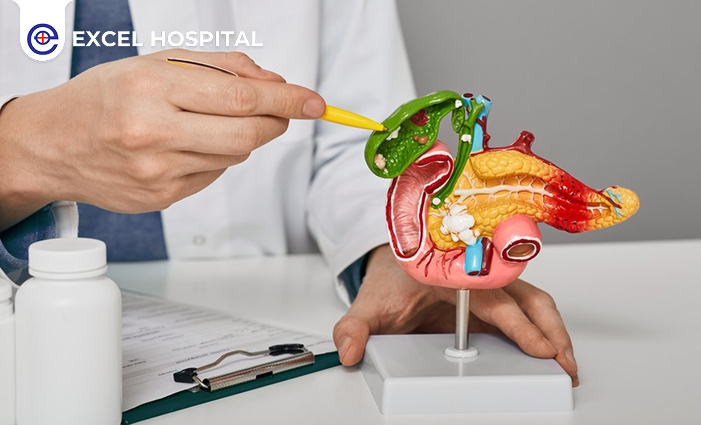
The liver is your body’s largest internal organ. It filters toxins from the blood, produces bile for digestion, regulates metabolism, stores energy, and helps with clotting. The gallbladder sits just beneath it, storing bile and releasing it into the digestive tract when you eat. Together, they play a central role in almost every digestive process your body runs.
When either of these organs is damaged or diseased — whether due to infection, stones, fat accumulation, or inflammation — the effects ripple through your entire system. And in India, the burden of liver and gallbladder disease is growing faster than most people realise.
The World Health Organization (WHO) estimates that liver diseases are responsible for approximately 2 million deaths per year globally — the majority of which are preventable with early detection and timely treatment.
What Makes These Two Organs So Easy to Overlook?
The liver has no pain receptors of its own. This means it can be inflamed, enlarged, or partially damaged without triggering the kind of sharp, localised pain that would normally push you to see a doctor. By the time you feel something is wrong, the disease has often progressed to a significant stage.
Gallbladder symptoms, on the other hand, are often mistaken for gas, indigestion, or acidity — some of the most common complaints that people self-medicate and ignore for years. The result? A simple gallstone that could have been managed early becomes a surgical emergency.
Liver Symptoms You Should Never Brush Off
Your liver communicates through subtle, easy-to-miss signals. Here are the most important ones to recognise — and none of them should be written off as “just stress” or “probably nothing”:
One of the clearest signs of liver trouble. Jaundice occurs when the liver cannot process bilirubin properly. Even mild yellowing of the whites of the eyes is a signal that needs immediate evaluation.
Not the tiredness that goes away with sleep — but a deep, constant exhaustion that doesn’t improve. The liver’s inability to filter toxins properly leads to a buildup that affects energy and mental clarity.
Liver disease disrupts digestion and metabolism. Feeling sick after meals, loss of interest in food, or dropping weight without trying are all red flags worth investigating.
A distended or swollen abdomen — particularly in the upper right region — can indicate fluid accumulation caused by advanced liver disease (cirrhosis). This needs urgent medical attention.
Cola-coloured or tea-coloured urine, and pale or clay-coloured stool, are classic signs that bile flow from the liver is obstructed — a serious issue that requires prompt evaluation.
The liver produces clotting factors. When it’s compromised, even minor cuts take longer to stop bleeding, and bruises appear more easily and take longer to fade.
A dull ache, pressure, or heaviness in the upper right side of the abdomen — where the liver sits — can indicate inflammation or enlargement of the organ itself.
Small, spider-like blood vessels appearing on the skin — particularly on the upper body — or redness of the palms (palmar erythema) can be signs of chronic liver disease.
Gallbladder Warning Signs People Commonly Mistake for Acidity
Gallbladder problems are genuinely underdiagnosed — not because they’re rare, but because their symptoms look remarkably like the indigestion and gas complaints that most Indians dismiss daily. Here’s what to actually watch for:
A sharp, cramping pain in the upper right abdomen — sometimes radiating to the right shoulder or back — especially after a fatty meal. This is the hallmark symptom of a gallstone attack and should never be ignored.
If you consistently feel uncomfortable, bloated, or nauseated specifically after meals — especially rich or greasy food — your gallbladder may be struggling to release bile properly.
When a gallstone causes a blockage that leads to infection (cholecystitis or cholangitis), fever and chills appear. This combination with abdominal pain is a medical emergency.
Yellow skin or eyes combined with pain in the upper abdomen suggests a gallstone blocking the common bile duct — a condition that requires urgent specialist care.
If antacids and gas tablets provide no real relief, and bloating is a constant part of your daily life — this deserves a proper evaluation, not another packet of Eno.
Referred pain from the gallbladder often travels upward to the right shoulder blade or between the shoulder blades. This is frequently misattributed to muscle strain or posture problems.
What Causes Liver and Gallbladder Disease?
Understanding the root causes helps you assess your own risk — and make the lifestyle and medical decisions that genuinely protect these organs long-term.
Excess fat accumulating in liver cells — increasingly common in urban India due to processed diets, sedentary lifestyles, diabetes, and obesity. It can silently progress to cirrhosis if undetected.
Hardened deposits of bile components that form in the gallbladder. Risk is higher in women over 40, people who are overweight, and those with high-cholesterol diets. Most are silent — until they block a duct.
Chronic hepatitis B or C infection leads to ongoing liver inflammation that can cause cirrhosis and liver cancer over years — often without obvious symptoms until late stages.
Long-term heavy alcohol consumption causes fatty liver, alcoholic hepatitis, and ultimately cirrhosis. It is one of the most preventable causes of end-stage liver disease.
Usually caused by a gallstone blocking the neck of the gallbladder, leading to infection, inflammation, and severe pain. Requires prompt treatment to prevent rupture.
Inflammation or blockage of the bile ducts — often due to gallstones, strictures, or tumours — prevents bile from flowing properly and leads to jaundice and serious infection.
Both are more common in India than globally. Gallbladder cancer is particularly prevalent in north and central India. Chronic gallstones, hepatitis B, and cirrhosis are major risk factors. Early detection through screening is the single most effective tool.
Conditions like autoimmune hepatitis, primary biliary cholangitis (PBC), and primary sclerosing cholangitis (PSC) occur when the immune system attacks liver tissue. These require specialist diagnosis and long-term management.
Who Is at Higher Risk?
| Risk Factor | Associated Condition |
|---|---|
| Obesity or rapid weight loss | Fatty liver (NAFLD), gallstones |
| Type 2 diabetes or insulin resistance | NAFLD, liver inflammation |
| Women over 40 | Gallstones (3x more common than men) |
| High-fat, low-fibre diet | Gallstones, fatty liver |
| Heavy or chronic alcohol use | Alcoholic liver disease, cirrhosis |
| Hepatitis B/C infection history | Cirrhosis, liver cancer |
| Family history of gallbladder disease | Gallstones, gallbladder cancer |
| Prolonged use of certain medications | Drug-induced liver injury (DILI) |
How Are Liver and Gallbladder Conditions Diagnosed?
If you or your doctor suspects a liver or gallbladder problem, here’s what the evaluation process typically involves. It’s far less daunting than most people imagine:
A detailed discussion of your symptoms, diet, alcohol intake, medications, family history, and any previous abdominal conditions or surgeries. Often, this conversation pinpoints the most likely cause.
Blood tests checking liver enzymes (ALT, AST, ALP, GGT), bilirubin levels, albumin, and clotting time. These reveal inflammation, bile duct obstruction, and overall liver health instantly.
The most widely used, completely painless first-line imaging tool. An ultrasound clearly shows liver texture (fatty changes), size, gallstones, bile duct dilation, and gallbladder wall thickening. It’s the best way to pick up early problems before symptoms appear. Available at Excel Hospital’s Gastro Imaging Services.
A specialised endoscopic procedure used to both diagnose and treat bile duct blockages — including removing gallstones stuck in the bile duct without open surgery. Available at Excel Hospital’s Endoscopy Suite.
For more detailed evaluation of liver tumours, cysts, bile duct anatomy, or complex gallbladder pathology. MRCP (a specialised MRI) provides detailed 3D images of the bile and pancreatic ducts without any radiation or dye injection.
In cases where the degree of liver damage or the exact type of liver disease needs to be confirmed — a small tissue sample is taken for laboratory analysis. It is used selectively and only when truly necessary.
🔗 Related Services at Excel Hospital Ahmedabad
Treatment Options — What Excel Hospital Provides
At Excel Hospital, liver and gallbladder conditions are handled by a specialist team with deep expertise in both medical management and minimally invasive surgery. Here’s what treatment typically involves:
Laparoscopic Cholecystectomy (Gallbladder Removal)
The gold standard treatment for gallstones causing symptoms. A keyhole surgery performed through 3–4 tiny incisions — no large cut, no long hospital stay. Most patients go home the next day and return to normal activities within a week. Our Laparoscopic Surgery team at Excel Hospital performs this with precision and minimal recovery time.
ERCP for Bile Duct Stones
When gallstones migrate into the common bile duct and cause a blockage, ERCP is used to locate and remove them using a specialised endoscope — without any incision at all. It’s also the procedure of choice for treating bile duct strictures and certain pancreatic duct problems.
Medical Management of Fatty Liver & Hepatitis
For NAFLD, the primary treatment is a structured combination of dietary change, weight management, control of diabetes and lipids, and close monitoring. For viral hepatitis B and C, highly effective antiviral medications are now available that can control the virus and prevent progression to cirrhosis or cancer.
Hepato-Biliary Surgery for Liver & Bile Duct Cancers
For more complex conditions — including liver tumours, bile duct cancers, or gallbladder cancer — Excel Hospital’s Hepato-Biliary & Pancreas Clinic offers specialised surgical and oncological care. Early-stage cases often have excellent outcomes with surgery.
Dr. Joy Abraham brings advanced subspeciality training in hepato-biliary, pancreatic, and laparoscopic GI surgery to every case he handles. His patient-first approach means you always receive a clear explanation of your diagnosis, your options, and your prognosis — with no unnecessary procedures and no rushed decisions. Hundreds of patients in Ahmedabad have benefited from his expertise in gallbladder surgery, liver disease management, and complex GI cancer care. Learn more about Dr. Joy Abraham →
When Should You See a Specialist — Right Now
Some symptoms require a same-day visit. Others mean you should book an appointment this week. Here’s a simple breakdown:
| Symptom / Situation | How Urgently to Act |
|---|---|
| Jaundice (yellow eyes or skin) | 🔴 Go today — do not wait |
| Severe upper right abdominal pain | 🔴 Emergency — seek care immediately |
| Fever with abdominal pain | 🔴 Could be cholecystitis — urgent care needed |
| Dark urine + pale stool | 🔴 Same-day evaluation required |
| Known gallstones but no symptoms | 🟡 Book a consultation within 1–2 weeks |
| Persistent fatigue + bloating | 🟡 Schedule a check-up this month |
| Unexplained weight loss | 🟡 Don’t delay beyond 2 weeks |
| No symptoms but high-risk factors | 🟢 Annual ultrasound + LFT as a baseline |
Don’t Wait Until It Hurts to Take Action
Your liver works silently every day to keep you well. The least you can do is check in on it once a year. Book a gastro consultation at Excel Hospital, Ahmedabad — and get clear answers from a specialist who truly knows this field.
📅 Book Your Consultation Now
📞 +91-84691 59595 | +91-79489 49595
📧 contact.excelhospital@gmail.com
📍 206, Shivalik 2, Satellite, Ahmedabad — 132 Feet Ring Road
Frequently Asked Questions (FAQs)
Medical Disclaimer: This article is intended for general health awareness and educational purposes only. It is not a substitute for professional medical advice, diagnosis, or treatment. Please consult a qualified gastroenterologist or GI surgeon for any personal health concerns. | © 2025 Excel Hospital, Ahmedabad. All Rights Reserved. | www.excelhospitals.com