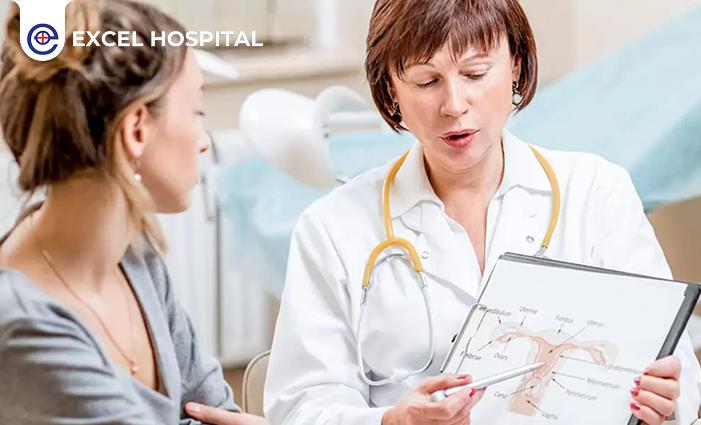

Understanding Female Infertility – Symptoms, Causes & When to Seek Help
What Is Female Infertility — And How Common Is It Really?
Female infertility is defined as the inability to conceive after 12 months of regular, unprotected intercourse — or after 6 months if you are over 35. It is far more common than most people acknowledge, and the silence around it makes the experience lonelier than it needs to be.
The truth is, infertility is not a personal failure. It is a medical condition — and like any medical condition, it deserves proper diagnosis, honest conversation, and evidence-based treatment. Millions of women across India face this challenge every year, often without knowing why or where to turn.
According to the World Health Organization (WHO), approximately 1 in 6 people globally are affected by infertility. Female factors account for around one-third of all infertility cases — making awareness, early diagnosis, and specialist care more important than ever.
Primary vs. Secondary Infertility — What’s the Difference?
Primary infertility refers to a woman who has never been able to conceive despite trying. Secondary infertility refers to difficulty conceiving after having had one or more successful pregnancies previously. Both are equally valid medical concerns — and both deserve the same level of attention and care.
Signs & Symptoms of Female Infertility You Shouldn’t Ignore
Infertility itself isn’t always visibly symptomatic — many women have no obvious signs at all. However, certain patterns and conditions serve as important warning signals that something may need medical attention:
Cycles shorter than 21 days or longer than 35 days, or periods that simply stop — may signal ovulation issues or hormonal imbalances.
Severe cramping that disrupts daily life is not “normal.” It can be a sign of endometriosis or fibroids — both leading causes of infertility.
Unexplained weight gain, adult acne, excessive facial hair, or sudden hair loss can indicate PCOS or thyroid dysfunction affecting fertility.
Abnormal flow patterns during menstruation can indicate uterine fibroids, polyps, or lining issues that interfere with implantation.
Persistent pelvic pain outside of periods, or unusual discharge, may point to infections or blocked fallopian tubes.
Two or more consecutive pregnancy losses are a clear medical signal that needs thorough investigation — not just patience.
What Are the Most Common Causes of Female Infertility?
Understanding the root cause is the most important step toward effective treatment. Female infertility is rarely a single-issue problem — it often involves a combination of factors that a specialist needs to carefully evaluate. Here are the most commonly identified causes:
The leading hormonal disorder among women of reproductive age. PCOS causes irregular ovulation or prevents ovulation altogether, directly impacting the ability to conceive. It is also associated with insulin resistance, weight gain, and excess androgen levels.
A condition where tissue similar to the uterine lining grows outside the uterus — on the ovaries, fallopian tubes, or pelvic walls. It causes scarring, inflammation, and structural damage that significantly reduces fertility.
Often caused by prior pelvic infections (PID), sexually transmitted infections, or previous surgeries. Blocked tubes prevent sperm from reaching the egg, making natural conception impossible without treatment.
Conditions that interfere with the release of eggs — including premature ovarian insufficiency (POI), hyperprolactinaemia, or hypothalamic dysfunction due to stress, extreme weight loss, or excessive exercise.
Fibroids, polyps, a septate uterus, or Asherman’s syndrome (uterine scarring) can all prevent the fertilised egg from implanting properly, leading to infertility or recurrent miscarriage.
Both an underactive (hypothyroidism) and overactive (hyperthyroidism) thyroid can disrupt menstrual cycles and hormone levels, making it difficult to conceive. A simple blood test reveals this — and treatment is often straightforward.
Egg quantity and quality naturally decline with age — significantly so after 35. This affects both the chance of conception and the risk of chromosomal abnormalities in the embryo. Age is one of the strongest predictors of fertility outcomes.
In about 10–15% of cases, no specific cause is found even after thorough testing. This can be frustrating, but it doesn’t mean untreatable. Many couples with unexplained infertility conceive successfully with targeted treatments like IUI.
Risk Factors That Increase the Chance of Female Infertility
While infertility can affect anyone, certain factors are known to increase the risk. Being aware of these can help you make informed decisions and seek help sooner:
| Risk Factor | How It Affects Fertility |
|---|---|
| Age above 35 | Significant decline in egg quality and ovarian reserve |
| Smoking | Damages eggs, accelerates ovarian ageing, and reduces IVF success rates |
| Obesity or being underweight | Disrupts hormonal balance and ovulation cycles |
| History of STIs or PID | Can cause scarring and blockage in the fallopian tubes |
| Chronic stress | Disrupts hypothalamic signalling, affecting ovulation timing |
| Prior abdominal surgery | Adhesions and scar tissue may affect uterus or tubes |
| Irregular or no periods (since puberty) | Often indicates underlying hormonal or ovulatory disorder |
| Family history of early menopause | Suggests possible reduced ovarian reserve (low AMH) |
What Does a Fertility Evaluation Involve?
If you’ve decided to see a specialist — or are considering it — here’s a clear picture of what a fertility evaluation typically looks like. There’s nothing frightening about it, and knowing what to expect helps a lot.
Your doctor will ask about your cycles, past pregnancies, surgeries, medications, and lifestyle habits. This conversation alone reveals a great deal about possible underlying causes.
Tests for FSH, LH, AMH (ovarian reserve), prolactin, thyroid hormones (TSH, T3, T4), and oestrogen levels. These give a comprehensive picture of your hormonal health and ovarian function.
A transvaginal ultrasound checks the uterus, ovaries, and fallopian tubes for structural abnormalities. The antral follicle count (AFC) gives a direct estimate of your ovarian reserve — how many eggs remain.
An HSG is an X-ray procedure that checks if the fallopian tubes are open and the uterine cavity is normal. A hysteroscopy uses a small camera to view the inside of the uterus directly — detecting polyps, fibroids, or scar tissue.
For suspected endometriosis or tubal blockage, a minimally invasive laparoscopy provides direct visualisation — and in many cases, the condition can be treated during the same procedure.
Fertility evaluation is never one-sided. A semen analysis for the male partner is always part of a complete workup — since male factors contribute to roughly 40–50% of all infertility cases.
🔗 Explore Women’s Care Services at Excel Hospital
When Should You Actually See a Fertility Specialist?
This is the question most women wrestle with the longest — and the answer is simpler than you think. The right time to see a specialist is not when things become unbearable. It’s when you have a question your body can’t answer on its own.
Here are clear, practical guidelines:
| Your Situation | When to See a Specialist |
|---|---|
| Under 35, trying for over 12 months | Book a consultation now |
| 35–40, trying for over 6 months | See a specialist without delay |
| Over 40, trying to conceive | Seek specialist advice immediately |
| Irregular periods or no periods | Don’t wait — get evaluated now |
| Known PCOS, endometriosis, or fibroids | Consult before you start trying |
| Two or more miscarriages | Seek recurrent pregnancy loss evaluation |
| Prior pelvic surgery or STI history | Pre-conception evaluation is essential |
Treatment Options — What Excel Hospital Offers
At Excel Hospital, we believe that infertility treatment should be personalised, compassionate, and grounded in evidence. There is no one-size-fits-all approach — your care plan is built around your specific diagnosis, age, and health goals.
Ovulation Induction
For women with PCOS or irregular ovulation, medication is used to stimulate the ovaries to release eggs at the right time. Combined with follicular monitoring (ultrasound tracking), this significantly improves the chances of natural conception or timed intercourse.
IUI (Intrauterine Insemination)
A minimally invasive procedure in which processed, concentrated sperm is placed directly into the uterus around the time of ovulation. It is often the first-line treatment for mild male factor infertility, unexplained infertility, or ovulatory dysfunction. Learn more about infertility treatments at Excel Hospital.
Laparoscopic Surgery for Endometriosis & Tubal Issues
Our minimally invasive gynaecological surgeries include laparoscopic removal of endometriotic tissue, ovarian cysts, fibroid removal (myomectomy), and tubal repair — procedures that can significantly restore natural fertility without major surgery or long recovery times.
Hormonal & Medical Management
Thyroid disorders, hyperprolactinaemia, and other hormonal causes of infertility are often managed effectively through medication alone — without any surgical intervention. Accurate diagnosis is the key.
Dr. Aarti Vazirani is known for her warm, attentive approach to women’s health. Patients describe her as someone who truly listens, takes time to address every concern, and makes you feel heard — a quality that matters deeply when navigating something as sensitive as infertility. She provides comprehensive care from fertility evaluation and ovulation induction to minimally invasive gynaecological surgery. Learn more about Dr. Aarti Vazirani →
You Deserve Answers. And a Plan.
If you’ve been wondering whether it’s time to seek help — it is. Book your infertility consultation at Excel Hospital, Ahmedabad today and take the first step with a specialist who truly cares.
📅 Book Your Consultation Now
📞 +91-84691 59595 | +91-79489 49595
📍 206, Shivalik 2, Satellite, Ahmedabad — 132 Feet Ring Road
Frequently Asked Questions (FAQs)
Medical Disclaimer: This article is for general health awareness and educational purposes only. It is not a substitute for professional medical advice, diagnosis, or treatment. Please consult a qualified gynaecologist or fertility specialist for any personal health concerns. | © 2026 Excel Hospital, Ahmedabad. All Rights Reserved. | www.excelhospitals.com