
Gallstones – Why More Young Indians Are Getting Them, and What to Do About It in Ahmedabad
What Are Gallstones?
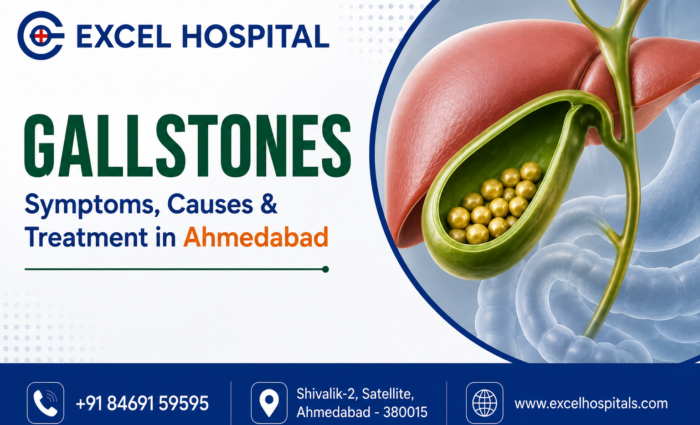
The gallbladder is a small, pear-shaped organ located beneath the liver that stores and concentrates bile, a digestive fluid produced by the liver that helps break down fat during digestion. Gallstones are hardened deposits that form within the gallbladder when substances in bile, most commonly cholesterol or bilirubin, crystallise and clump together.
Gallstones can range in size from as small as a grain of sand to as large as a golf ball, and a person can have a single stone or many at once. A significant proportion of people with gallstones never experience any symptoms, a situation referred to as silent gallstones, which are often discovered incidentally during an abdominal ultrasound performed for an unrelated reason.
Problems arise when a gallstone blocks the flow of bile, either at the outlet of the gallbladder itself or further along the bile duct system. This blockage is what typically triggers the sudden, significant pain associated with a gallbladder attack, and can, in some cases, lead to more serious complications if not addressed.
Why Gallstones Are Rising Among Young Indians
Gallstones have traditionally been associated with an older age group, but this pattern is shifting noticeably, closely paralleling broader lifestyle and dietary changes seen across urban India. Rising rates of obesity, diets higher in refined carbohydrates and saturated fat, sedentary work patterns, and an increase in rapid weight loss attempts through crash dieting have all contributed to gallstones appearing at younger ages than was traditionally expected.
Rapid, significant weight loss in particular deserves specific mention, since it is a well-recognised trigger for gallstone formation. This is relevant given the growing popularity of aggressive weight loss approaches, including certain diet trends and rapid weight loss medications, without adequate awareness of this specific risk.
Types of Gallstones
The most common type, forming when bile contains too much cholesterol relative to the bile salts needed to keep it dissolved. Typically yellow-green in colour and closely linked to diet, weight, and metabolic factors.
Formed when bile contains excess bilirubin, a substance produced from the breakdown of red blood cells. More commonly associated with certain blood disorders, liver conditions, or infections affecting the bile ducts.
Composed of a combination of cholesterol, bilirubin, and calcium salts. A common finding when multiple stones of varying composition are present within the same gallbladder.
Symptoms — Recognising a Gallbladder Attack
Silent gallstones cause no symptoms and are often found incidentally. When gallstones do cause symptoms, the presentation is often distinctive enough to recognise, particularly once you know what to look for.
Sharp, intense pain typically in the upper right or central abdomen, often described as a steady, severe ache rather than a cramping sensation, usually lasting from thirty minutes to several hours.
Pain that extends to the area between the shoulder blades or the right shoulder is a characteristic feature that helps distinguish gallbladder pain from other causes of abdominal discomfort.
Attacks are frequently triggered by eating fatty or heavy meals, since fat intake stimulates the gallbladder to contract and release bile, which can dislodge or move a stone.
Commonly accompanies an acute gallbladder attack, often alongside the characteristic upper abdominal pain described above.
Some individuals experience recurring bloating, belching, or general digestive discomfort, particularly after fatty meals, even between more acute attacks.
Fever accompanying abdominal pain suggests possible infection or inflammation of the gallbladder and requires prompt medical evaluation rather than waiting to see if it resolves.
Who Is at Risk of Developing Gallstones?
Excess body weight increases cholesterol levels in bile, significantly raising the likelihood of cholesterol stone formation. This remains one of the strongest and most consistent risk factors identified.
Losing weight very quickly, whether through very low-calorie diets, certain weight loss medications, or bariatric surgery, causes the liver to release extra cholesterol into bile, meaningfully increasing gallstone risk during this period.
Women are more commonly affected than men, largely due to the influence of oestrogen on cholesterol levels in bile. Pregnancy, hormonal contraceptives, and hormone replacement therapy can all further increase risk.
A family history of gallstones increases individual risk, suggesting a meaningful genetic component in addition to lifestyle and dietary factors.
Diets high in refined carbohydrates and unhealthy fats, combined with low fibre intake, are associated with an increased risk of cholesterol gallstone formation.
Diabetes and associated metabolic disturbances are linked to a higher risk of gallstone formation, reflecting the broader connection between metabolic health and bile composition.
Complications of Untreated Gallstones
While many gallstones remain silent indefinitely, symptomatic gallstones that are left unaddressed carry a meaningful risk of complications over time.
| Complication | What Happens |
|---|---|
| Acute Cholecystitis | Inflammation and infection of the gallbladder caused by a persistently blocked outlet, typically requiring hospital admission and prompt treatment |
| Choledocholithiasis | A gallstone migrates into the main bile duct, causing blockage, jaundice, and pain, and requiring specific endoscopic or surgical intervention |
| Gallstone Pancreatitis | A gallstone temporarily blocks the shared duct near the pancreas, triggering inflammation of the pancreas, a potentially serious condition requiring hospital treatment |
| Cholangitis | Infection of the bile duct system, presenting with fever, jaundice, and pain, considered a medical emergency requiring urgent treatment |
These complications are an important reason why symptomatic gallstones, once identified, are generally recommended for treatment rather than indefinite observation, since the risk of a significant complication tends to increase with repeated symptomatic episodes over time.
How Gallstones Are Diagnosed in Ahmedabad
| Investigation | What It Shows | Role in Diagnosis |
|---|---|---|
| Abdominal Ultrasound | Presence, number, and size of gallstones, gallbladder wall thickness | First-line investigation, highly accurate for gallbladder stones |
| Liver Function Tests | Assesses whether bile duct obstruction is present | Recommended when jaundice or bile duct involvement is suspected |
| MRCP (MR Cholangiopancreatography) | Detailed imaging of the bile duct system | Used when a stone in the main bile duct is suspected but not clearly seen on ultrasound |
| CT Scan | Assesses for complications such as pancreatitis or gallbladder inflammation | Used in acute presentations with concern for complications |
Gallstone Evaluation in Ahmedabad — Excel Hospital
At Excel Hospital, Satellite, Ahmedabad, Dr. Joy Abraham provides comprehensive gallstone evaluation, including abdominal ultrasound and relevant blood testing, along with a clear explanation of findings and a personalised recommendation regarding observation versus surgical treatment. Patients from across Ahmedabad, including Bopal, Bodakdev, Prahlad Nagar, and the SG Highway corridor, visit Excel Hospital for specialist gastroenterology and gallbladder surgical care.
Treatment — When Surgery Is Needed and What It Involves
Treatment recommendations depend significantly on whether gallstones are causing symptoms.
Silent Gallstones — Observation
Gallstones discovered incidentally, without any symptoms, are generally managed with observation alone, since the majority never go on to cause problems. Surgery is not typically recommended purely on the basis of an incidental finding in the absence of symptoms.
Symptomatic Gallstones — Laparoscopic Cholecystectomy
For gallstones causing recurrent pain or complications, surgical removal of the gallbladder, known as cholecystectomy, is the definitive and most effective treatment. This is performed laparoscopically in the vast majority of cases at Excel Hospital’s Laparoscopic Surgery Clinic in Ahmedabad, using small incisions, resulting in significantly faster recovery, less pain, and a quicker return to normal activity compared to traditional open surgery.
The gallbladder is not an essential organ for long-term health. After its removal, bile flows directly from the liver into the small intestine rather than being stored and concentrated first, and the vast majority of people adjust to this without any significant long-term dietary restriction, aside from a temporary period of moderating fat intake during initial recovery.
Managing Bile Duct Stones
When a stone has moved into the main bile duct, an endoscopic procedure called ERCP is typically used to remove it prior to, or sometimes at the same time as, gallbladder removal, ensuring the duct is clear before or alongside the primary surgical treatment.
Related Services at Excel Hospital, Satellite, Ahmedabad
Common Myths About Gallstones — Cleared Up for Patients in Ahmedabad
| Myth | Fact |
|---|---|
| Gallstones only affect older, overweight people | Gallstones are increasingly diagnosed in people in their twenties and thirties, and can occur even in individuals of normal weight |
| All gallstones need to be surgically removed | Silent gallstones causing no symptoms are generally managed with observation alone. Surgery is primarily recommended for symptomatic gallstones or complications |
| You cannot digest food normally after gallbladder removal | The vast majority of people adjust well after gallbladder removal, with only a temporary period of moderating fat intake typically needed during initial recovery |
| Special diets alone can dissolve gallstones | Diet can help manage risk factors and reduce symptoms, but dietary change alone does not reliably dissolve existing gallstones |
| Gallbladder pain always occurs on the left side | Gallbladder pain is typically felt in the upper right or central abdomen, often radiating to the right shoulder or back, not the left side |
| Rapid weight loss is always a good thing for gallbladder health | Rapid, significant weight loss is actually a well-recognised trigger for gallstone formation, making gradual, sustained weight loss the safer approach |
When to Seek Care in Ahmedabad for Gallstones
| Your Situation | What to Do |
|---|---|
| Sudden severe upper abdominal pain, especially after a fatty meal | Seek prompt medical evaluation, including an abdominal ultrasound |
| Gallstones found incidentally on a scan, with no symptoms | Discuss with a gastroenterologist whether observation alone is appropriate |
| Recurring episodes of abdominal pain after eating | Book a consultation for gallstone evaluation and to discuss treatment options |
| Fever, chills, or yellowing of the skin or eyes with abdominal pain | Seek emergency care immediately — this may indicate a serious complication |
| Considering rapid weight loss through diet or medication | Discuss gallstone risk with your doctor as part of your weight loss planning |
| Persistent vomiting alongside abdominal pain | Seek urgent medical evaluation rather than waiting for symptoms to pass |
Dr. Joy Abraham provides thorough, individualised gallstone care, from accurate diagnosis through to laparoscopic gallbladder surgery when needed, with a strong focus on minimally invasive technique for faster recovery. He works with patients to clearly explain whether observation or surgery is the right approach for their specific situation, avoiding a one-size-fits-all recommendation. Patients across Ahmedabad, including Satellite, Bopal, Bodakdev, and Prahlad Nagar, trust his clear, practical guidance on gallbladder health. Learn more about Dr. Joy Abraham
Sudden Abdominal Pain After Meals Deserves a Real Answer
Whether you are experiencing symptoms or have gallstones found incidentally on a scan, a proper evaluation gives you clarity on the right next step. Book your consultation at Excel Hospital, Satellite, Ahmedabad today.
Book Your Consultation in AhmedabadFrequently Asked Questions About Gallstones in Ahmedabad
Medical Disclaimer: This article is written for general health awareness purposes only and does not constitute medical advice, diagnosis, or treatment recommendation. For personal health concerns related to abdominal pain or gallstones, please consult a qualified gastroenterologist. Information accurate as of 2026. Copyright 2026 Excel Hospital, Ahmedabad. All Rights Reserved. www.excelhospitals.com