Fatty Liver Disease (MASLD) – India’s Fastest Growing Liver Condition, and What It Means for You in Ahmedabad
Dr. Joy Abraham — MS, MCh (GI Surgeon)
Excel Hospital, Satellite, Ahmedabad
2026
10 min read
~2,400 words
“Fatty liver used to be something we mainly saw in people who drank heavily. That has changed completely. Today, the majority of fatty liver cases I see in Ahmedabad have nothing to do with alcohol at all. They are linked to weight, diet, and metabolic health, often in people who feel completely fine and have no idea anything is happening inside their liver. That silence is exactly what makes this condition worth understanding before symptoms ever appear.”
What Is Fatty Liver Disease (MASLD)?
Fatty liver disease occurs when excess fat accumulates in liver cells. A small amount of fat in the liver is normal, but when fat makes up more than five to ten percent of liver weight, it is classified as fatty liver disease. The condition was previously known as Non-Alcoholic Fatty Liver Disease, or NAFLD, but has been renamed Metabolic dysfunction-Associated Steatotic Liver Disease, or MASLD, to more accurately reflect its strong connection to metabolic health factors such as weight, blood sugar, and cholesterol, rather than being defined mainly by the absence of alcohol use.
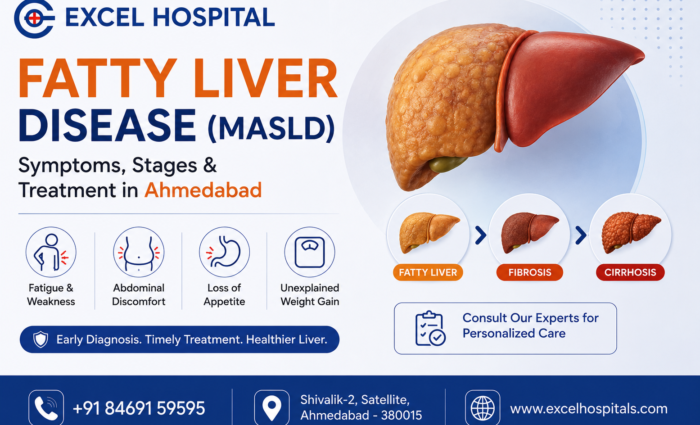
In its early stage, fatty liver alone often causes no significant damage and can be reversible with appropriate lifestyle changes. However, in a meaningful proportion of cases, ongoing fat accumulation leads to inflammation of the liver, a more advanced stage now referred to as MASH, or Metabolic dysfunction-Associated Steatohepatitis. Left unaddressed, this inflammation can progress over years to fibrosis, and eventually to cirrhosis, a serious and largely irreversible form of liver damage.
According to research summarised by the National Institutes of Health (NIH), fatty liver disease prevalence in India is estimated to affect a substantial proportion of the adult population, with figures in several studies ranging close to one in three adults, closely tracking the parallel rise in obesity, type 2 diabetes, and sedentary urban lifestyles across the country.
~1 in 3Indian adults is estimated to have some degree of fatty liver disease
Majorityof fatty liver cases today are metabolic in origin, not related to alcohol consumption
Mostly Silentfatty liver typically causes no symptoms until it has progressed significantly
Why Fatty Liver Is Rising So Fast in India
The sharp rise in fatty liver disease across Indian cities, including Ahmedabad, closely mirrors broader shifts in diet and lifestyle over the past two decades. Increased consumption of refined carbohydrates, sugar-sweetened beverages, and ultra-processed food, combined with declining physical activity due to desk-based work and increased screen time, has driven parallel rises in obesity, type 2 diabetes, and fatty liver disease across the country.
Importantly, fatty liver disease is not solely a condition of visibly overweight individuals. A meaningful proportion of cases occur in people with a normal body mass index but who carry excess fat around the abdomen and organs, a pattern sometimes described as lean or metabolically obese. This is a significant reason fatty liver is frequently missed, since it does not always fit the profile many people, and even some clinicians, associate with the condition.
A Condition Closely Tied to Metabolic Health
Fatty liver disease rarely occurs in isolation. It is closely linked to insulin resistance, type 2 diabetes, high cholesterol, and elevated blood pressure, collectively referred to as metabolic syndrome. This is precisely why the medical community renamed the condition to reflect its metabolic origins, and why addressing fatty liver often means addressing overall metabolic health together, rather than treating the liver in isolation.
The Stages of Fatty Liver Disease
Fatty liver disease progresses through recognisable stages, and understanding where a person falls on this spectrum is central to determining the urgency and type of treatment needed.
Stage 1 — Simple SteatosisFat accumulation in the liver without significant inflammation or damage. Often fully reversible through lifestyle changes alone.
Stage 2 — MASH (Steatohepatitis)Fat accumulation accompanied by liver inflammation and early cell damage. Requires more structured medical management alongside lifestyle change.
Stage 3 — FibrosisOngoing inflammation leads to scar tissue formation in the liver. Still often manageable and partly reversible with early, sustained intervention.
Stage 4 — CirrhosisExtensive, largely irreversible scarring that significantly impairs liver function and increases the risk of liver failure and liver cancer.
The critical point in this progression is that the earlier stages, where the majority of newly diagnosed cases fall, are genuinely reversible. This is precisely why early detection through appropriate screening carries such significant long-term value.
Symptoms — Why Fatty Liver Is Often Silent
One of the most important things to understand about fatty liver disease is that it typically causes no noticeable symptoms in its early and even moderate stages. This is a major reason the condition remains so widely undiagnosed, often being discovered incidentally during a routine ultrasound or blood test performed for an entirely unrelated reason.
Mild FatigueA vague, persistent sense of tiredness that is easy to attribute to a busy lifestyle rather than an underlying liver condition.
Dull Right Upper Abdominal DiscomfortA mild, occasional ache or sense of fullness beneath the right ribs, where the liver is located, often subtle enough to be overlooked entirely.
Elevated Liver Enzymes on Routine Blood TestsOften the very first clue, discovered incidentally during a general health check-up rather than through any symptom prompting the test in the first place.
Unintentional Weight ChangesDifficulty losing weight despite effort, or in more advanced disease, unintentional weight loss, both of which warrant further evaluation.
Symptoms of Advanced DiseaseJaundice, visible abdominal swelling from fluid accumulation, and easy bruising are late-stage signs indicating significant liver damage requiring urgent medical attention.
The Case for Proactive Screening
Because fatty liver disease is so frequently silent, waiting for symptoms to appear before seeking evaluation means many cases are only caught at a more advanced stage. For individuals with recognised risk factors such as excess weight, diabetes, or high cholesterol, proactive liver screening, even in the complete absence of symptoms, is a genuinely worthwhile preventive step.
Who Is at Risk of Fatty Liver Disease?
Excess Body Weight and Abdominal ObesityThe single strongest risk factor, with abdominal fat distribution carrying particularly significant risk, even in people with an overall normal body weight.
Type 2 Diabetes and Insulin ResistanceA very high proportion of people with type 2 diabetes also have fatty liver disease, reflecting the closely linked nature of these two metabolic conditions.
High Cholesterol and TriglyceridesAbnormal blood lipid levels are both a contributing factor to fatty liver disease and a common accompanying finding at the time of diagnosis.
Sedentary LifestyleProlonged periods of physical inactivity, common in desk-based urban work environments, significantly increase risk independent of diet alone.
Diet High in Refined Carbohydrates and SugarRegular consumption of sugar-sweetened beverages, refined grains, and highly processed food is strongly associated with fat accumulation in the liver.
Family History and Genetic FactorsA family history of fatty liver disease, diabetes, or metabolic syndrome increases individual risk, pointing to a meaningful genetic component alongside lifestyle factors.
How Is Fatty Liver Diagnosed in Ahmedabad?
Investigation
What It Shows
Role in Diagnosis
Liver Function Tests (Blood)
Elevated liver enzymes indicating possible inflammation
Often the first clue, though can be normal even with significant fat present
Abdominal Ultrasound
Fat accumulation in the liver, liver size and texture
First-line imaging, widely available and effective at detecting significant fat content
FibroScan (Transient Elastography)
Liver stiffness, indicating the degree of fibrosis or scarring present
Non-invasive and highly valuable for staging disease severity without a biopsy
Blood Sugar and Lipid Profile
Diabetes, insulin resistance, cholesterol levels
Assesses the broader metabolic picture driving the liver condition
Liver Biopsy
Direct microscopic assessment of inflammation and fibrosis
Reserved for cases where non-invasive tests are inconclusive or advanced disease is suspected
Fatty Liver Evaluation in Ahmedabad — Excel Hospital
At Excel Hospital, Satellite, Ahmedabad, Dr. Joy Abraham provides comprehensive fatty liver evaluation, including liver function tests, abdominal ultrasound, and referral for FibroScan when staging is needed, combined with a broader metabolic assessment covering blood sugar and cholesterol. Patients receive a clear, personalised management plan rather than a generic recommendation to simply lose weight. Patients from across Ahmedabad, including Bopal, Bodakdev, Prahlad Nagar, and the SG Highway corridor, visit Excel Hospital for specialist gastroenterology and liver care.
Treatment — Reversing Fatty Liver Through Lifestyle and Medical Care
The encouraging reality of fatty liver disease is that its earlier stages are genuinely reversible, and even more advanced fibrosis can often be partially reversed or its progression significantly slowed with sustained, appropriate intervention.
Weight Reduction
A sustained weight reduction of seven to ten percent of body weight has been shown to produce meaningful improvement in liver fat content and inflammation in the majority of patients. This does not require extreme measures, but does require a consistent, structured approach over months rather than a short-term crash effort.
Dietary Modification
Reducing refined carbohydrates, added sugar, and processed food, while increasing dietary fibre, vegetables, and healthy fats, forms the foundation of dietary management. A structured dietary plan, ideally guided by a dietitian familiar with metabolic liver disease, tends to produce more consistent, lasting results than general advice alone.
Regular Physical Activity
Consistent aerobic exercise, even independent of significant weight loss, has been shown to directly reduce liver fat content. A combination of aerobic activity and resistance training over at least 150 minutes per week is generally recommended for meaningful metabolic benefit.
Managing Associated Conditions
Effective control of diabetes, cholesterol, and blood pressure, where present, is an integral part of fatty liver management, given how closely these conditions are metabolically linked. This is often managed collaboratively between gastroenterology and other specialists as needed.
Emerging Medical Therapies
While lifestyle change remains the cornerstone of treatment, several medications are increasingly being used for more advanced MASH, particularly in patients with significant fibrosis or coexisting diabetes. The appropriate use of these therapies is individualised based on disease stage and overall health profile, and should be discussed directly with a gastroenterologist.
The Most Important Message
Fatty liver disease diagnosed early is one of the most reversible chronic conditions in medicine. A diagnosis at this stage is not a reason for alarm, but a genuine opportunity to make changes that meaningfully protect long-term liver and overall metabolic health.
Fatty Liver in People Who Are Not Overweight
A pattern increasingly recognised in clinical practice is fatty liver disease occurring in individuals with a normal body mass index, sometimes referred to as lean MASLD. This is particularly relevant in the Indian population, where body fat distribution patterns can result in significant abdominal and organ fat even at a normal overall weight.
This pattern is an important reason why fatty liver screening should not be limited only to individuals who appear visibly overweight. Family history, diabetes, abnormal cholesterol levels, and abdominal fat distribution are all relevant risk indicators independent of overall body weight, and should be considered when assessing individual risk.
Related Services at Excel Hospital, Satellite, Ahmedabad
Common Myths About Fatty Liver Disease — Cleared Up for Patients in Ahmedabad
Myth
Fact
Fatty liver only happens to people who drink alcohol
The majority of fatty liver cases today are metabolic in origin and occur in people who do not drink alcohol at all
If I’m not overweight, I don’t need to worry about fatty liver
Fatty liver can occur in people with a normal body weight, particularly with abdominal fat, diabetes, or a relevant family history
Fatty liver has no symptoms, so it’s not serious
The absence of symptoms in early stages does not mean the condition is harmless. Left unaddressed, it can progress to inflammation, fibrosis, and eventually cirrhosis
Once you have fatty liver, the damage cannot be reversed
Early stage fatty liver is genuinely reversible with sustained lifestyle change, and even more advanced fibrosis can often be partly reversed with early, consistent intervention
Fatty liver only affects older adults
Fatty liver disease is increasingly diagnosed in younger adults, closely tracking rising rates of obesity and diabetes at younger ages
A normal liver enzyme blood test rules out fatty liver
Liver enzymes can be entirely normal even with significant fat accumulation present. Imaging such as ultrasound is needed to properly assess for fatty liver
When to See a Gastroenterologist in Ahmedabad for Fatty Liver
Your Situation
What to Do
Fatty liver mentioned incidentally on a routine ultrasound report
Book a gastroenterology consultation for proper evaluation and staging
Diagnosed with type 2 diabetes or high cholesterol
Request a liver screening as part of your broader metabolic evaluation
Elevated liver enzymes found on routine blood work
Follow up with imaging and further assessment rather than repeating the test alone
Strong family history of fatty liver, diabetes, or liver disease
Consider proactive screening even in the absence of any symptoms
Struggling to lose weight despite consistent effort
Discuss a structured, medically guided approach with a specialist
Known fatty liver with new symptoms such as jaundice or abdominal swelling
Seek prompt medical evaluation — these may indicate disease progression
Dr. Joy Abraham — MS, MCh (GI Surgery)
Laparoscopic Gastro-Surgeon and GI Specialist | Excel Hospital, Satellite, Ahmedabad
Dr. Joy Abraham provides a structured, evidence-based approach to fatty liver disease, combining accurate staging through appropriate investigations with a realistic, sustainable management plan addressing diet, activity, and associated metabolic conditions together. He works to help patients understand fatty liver not as a source of alarm, but as an early, genuinely actionable signal for protecting long-term health. Patients across Ahmedabad, including Satellite, Bopal, Bodakdev, and Prahlad Nagar, trust his clear, practical guidance on liver health. Learn more about Dr. Joy Abraham
Fatty Liver Caught Early Is Fatty Liver You Can Reverse
Whether discovered incidentally or suspected due to risk factors, a proper liver evaluation gives you clarity and a real path forward. Book your consultation at Excel Hospital, Satellite, Ahmedabad today.
Book Your Consultation in Ahmedabad
Frequently Asked Questions About Fatty Liver Disease in Ahmedabad
Can fatty liver disease be completely reversed?
Early stage fatty liver, known as simple steatosis, is genuinely reversible with sustained weight reduction, dietary change, and regular physical activity. Even more advanced fibrosis can often be partially reversed, or its progression significantly slowed, with early and consistent intervention. The key factor is how early the condition is identified and addressed, which is why screening in at-risk individuals, even without symptoms, carries real value.
Do I need a liver biopsy to diagnose fatty liver?
Not usually. Fatty liver disease can typically be identified through abdominal ultrasound and blood tests. FibroScan, a non-invasive test measuring liver stiffness, provides valuable information about the degree of fibrosis without requiring a biopsy. Liver biopsy is generally reserved for cases where non-invasive tests are inconclusive or where more advanced disease is strongly suspected and precise staging is needed to guide treatment decisions.
Can a person with a normal weight have fatty liver disease?
Yes. This pattern, sometimes called lean MASLD, is increasingly recognised, particularly relevant in the Indian population where abdominal and organ fat can be significant even with a normal overall body weight. Family history, diabetes, and cholesterol levels are relevant risk factors independent of visible body weight, which is why screening should not be limited only to individuals who appear overweight.
What is the difference between fatty liver and cirrhosis?
Fatty liver disease describes fat accumulation in the liver, which in its early stage causes little to no lasting damage and is often reversible. Cirrhosis is a much more advanced, largely irreversible stage of liver scarring that can result from years of untreated inflammation, of which fatty liver disease is one significant cause. The progression from simple fatty liver to cirrhosis typically takes years and passes through intermediate stages of inflammation and fibrosis, which is precisely why early detection and treatment matter so much in preventing this progression.
Is fatty liver disease dangerous if I have no symptoms?
Yes, it can still be significant even without symptoms. Fatty liver disease is often entirely silent in its early and moderate stages, which is precisely why it frequently progresses undetected. The absence of symptoms does not indicate the absence of risk. This is why proactive screening is particularly valuable for individuals with recognised risk factors such as diabetes, high cholesterol, or a relevant family history, rather than waiting for symptoms to prompt evaluation.
Where can I get fatty liver evaluation and treatment in Ahmedabad?
Excel Hospital, located at 206 Shivalik 2, Satellite, Ahmedabad, provides comprehensive fatty liver evaluation and management under Dr. Joy Abraham, including liver function tests, ultrasound imaging, FibroScan referral for staging, and a personalised lifestyle and medical management plan. To book a consultation, call +91-84691 59595 or visit the contact page at excelhospitals.com.
Medical Disclaimer: This article is written for general health awareness purposes only and does not constitute medical advice, diagnosis, or treatment recommendation. For personal health concerns related to liver health, please consult a qualified gastroenterologist. Information accurate as of 2026. Copyright 2026 Excel Hospital, Ahmedabad. All Rights Reserved. www.excelhospitals.com