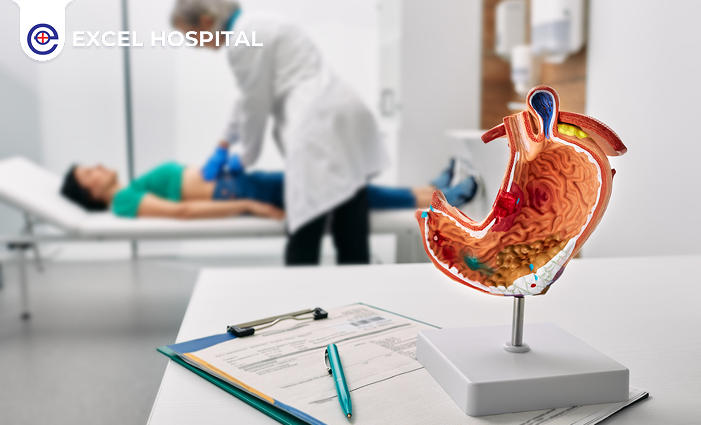

Why Regular Gastro Check-ups After 40 Are Non-Negotiable — A Complete Guide
Your 40s Are a Wake-Up Call for Your Gut
Let’s be honest — most of us spend our 30s living on chai, late-night dinners, and the occasional antacid, assuming the stomach can handle anything. And for a while, it can. But the moment you cross 40, the rules quietly change.
Your digestive system starts slowing down. Metabolism dips. Hormonal shifts affect gut motility. Years of dietary habits, stress, and lifestyle choices begin to leave a visible mark — not just on your waistline, but deep inside your colon, liver, stomach lining, and pancreas.
The scary part? Most serious GI conditions — including colorectal cancer, liver disease, and chronic pancreatitis — develop silently. By the time you feel discomfort, the problem has often been brewing for years.
According to the World Health Organization (WHO), colorectal cancer is among the top 3 most diagnosed cancers globally — and the majority of cases are entirely preventable with timely screening and lifestyle adjustments.
Signs Your Gut is Trying to Tell You Something
Here’s the thing — your body does give signals. We just tend to dismiss them as “acidity” or “stress.” If you’re over 40 and experiencing any of the following regularly, it’s time to stop ignoring it:
What Happens During a Gastro Check-Up After 40?
A lot of people avoid gastro check-ups simply because they don’t know what to expect. The truth is — it’s far less intimidating than most people imagine, and the peace of mind it provides is priceless.
Here’s a realistic breakdown of what a comprehensive gastroenterology evaluation at 40+ typically involves:
Step 1: Detailed Medical History & Clinical Consultation
Your gastro specialist will begin by understanding your complete health picture — family history of GI cancers, dietary habits, alcohol intake, previous surgeries, current medications, and any symptoms you’ve been experiencing. This conversation alone can uncover several risk factors people weren’t even aware of.
Step 2: Physical Examination
A thorough abdominal examination helps the doctor identify any organ enlargement, tenderness, or abnormalities that need further investigation. It’s quick, painless, and surprisingly informative.
Step 3: Blood & Stool Tests
Routine blood work checks liver function (ALT, AST, bilirubin), pancreatic enzymes, complete blood count for signs of anaemia, and inflammatory markers. A stool test can detect hidden (occult) blood that isn’t visible to the naked eye — an early warning sign of colorectal problems.
Step 4: Endoscopy (Upper GI / Colonoscopy)
This is where most people’s eyebrows go up — but it’s truly the gold standard. An endoscopy at Excel Hospital involves a thin, flexible camera that allows the specialist to examine your food pipe, stomach, and upper intestine in real time. A colonoscopy does the same for the colon and rectum.
The Mayo Clinic recommends that adults begin regular colorectal cancer screenings at age 45. For those with a family history or other risk factors, it may be recommended earlier.
Step 5: Imaging — Ultrasound & X-Ray
Abdominal ultrasound is a non-invasive, radiation-free way to assess the liver, gallbladder, spleen, kidneys, and pancreas. Our Gastro Imaging Services in Ahmedabad include high-resolution ultrasound and digital X-ray for precise diagnosis.
| Test / Procedure | What It Checks | Recommended Frequency After 40 |
|---|---|---|
| Liver Function Test (LFT) | Liver health, enzymes, fatty liver | Every year |
| Stool Occult Blood Test | Hidden blood in stool — early cancer signal | Every 1-2 years |
| Upper GI Endoscopy | Stomach, oesophagus, duodenum | Every 3-5 years (or as advised) |
| Colonoscopy | Colon, rectum, polyps, cancer screening | Every 5-10 years from age 45 |
| Abdominal Ultrasound | Liver, gallbladder, pancreas, spleen | Every 1-2 years |
| H. pylori Test | Stomach ulcer bacteria | Once (more if symptomatic) |
| ERCP / MRCP | Bile duct, pancreatic duct | As clinically indicated |
Who Is at Higher Risk and Needs Check-ups More Often?
While everyone over 40 benefits from a baseline gastro check-up, certain groups face significantly higher risk and should be screened earlier and more frequently:
- Family history of colon cancer, stomach cancer, or inflammatory bowel disease
- Chronic smokers or heavy alcohol consumers (risk of oesophageal and liver cancer)
- Diabetics and obese individuals — at higher risk for fatty liver (NAFLD) and pancreatic disease
- Individuals with recurring acidity — may develop Barrett’s oesophagus, a precancerous condition
- Those with existing gallstones — risk of gallbladder cancer if untreated
- Anyone who has had previous GI surgery — scar tissue and adhesions can cause complications over time
The Diseases Caught Early With Regular Gastro Check-ups
1. Colorectal Cancer
The third most common cancer worldwide. Regular colonoscopy is the only test that both detects and prevents it by removing pre-cancerous polyps. At Excel Hospital, our Colon & Rectal Cancer Clinic in Ahmedabad provides end-to-end care from screening to surgical treatment.
2. Fatty Liver Disease (NAFLD / NASH)
Often called the “silent epidemic,” non-alcoholic fatty liver disease affects roughly 1 in 4 adults globally. It has no obvious symptoms in early stages but can progress to cirrhosis and liver failure. Simple ultrasound and blood tests detect it early.
3. Pancreatic Disorders
Pancreatitis and pancreatic tumours are notoriously hard to detect late — but early imaging and enzyme tests can catch signs of dysfunction. Our Hepato-Biliary & Pancreas Clinic specialises in exactly these conditions.
4. Gallbladder Stones & Cholecystitis
Extremely common after 40, particularly in women. Stones often cause no pain until they cause a blockage or infection. Routine ultrasound reveals them at an easily treatable stage — long before complications arise.
5. GERD and Barrett’s Oesophagus
Chronic acid reflux over years can damage the oesophagus lining, leading to Barrett’s oesophagus — a known precursor to oesophageal cancer. An upper GI endoscopy detects it early. Learn more about our Esophageal & Upper GI Surgery Clinic.
🔷 BOFU — Take ActionWhy Patients in Ahmedabad Choose Excel Hospital for Gastro Care
When it comes to something as important as your digestive health, you need a specialist you can genuinely trust — someone who will listen, not rush, and give you answers based on evidence rather than assumption.
What Sets Excel Hospital Apart
- Superspeciality Gastro Care — Dedicated focus on digestive and GI health, not a general OPD
- Advanced Endoscopy Suite — Upper GI endoscopy, colonoscopy, ERCP, and sigmoidoscopy under one roof
- State-of-the-art OT — Equipped for precision laparoscopic and robotic-assisted GI surgery
- Same-day Consultation — No month-long waiting lists; your health can’t wait
- Transparent, Patient-first Approach — You’ll always know your diagnosis, options, and plan
- Centrally located in Ahmedabad — Satellite area, easily accessible from all parts of the city
📞 Call Excel Hospital: +91-84691 59595 | +91-79489 49595
📧 contact.excelhospital@gmail.com
Frequently Asked Questions (FAQs)
Your Gut Health Can’t Wait Any Longer
Whether you have symptoms or simply know it’s time for a check-up — book your gastroenterology consultation at Excel Hospital, Ahmedabad today. Early detection changes everything.
📅 Book Your Gastro Consultation Now206, Shivalik 2, Satellite, Ahmedabad — Near IOC Petrol Pump, 132 Feet Ring Road